
How to Plant a Church “Starting with Nothing”
As someone who’s spent much of his life planting churches in Asia, Ted now serves as the Director of Encompass World Partners’s Church Planting Network. He says, “Planting churches among the least-reached isn’t complicated—it’s just really hard.”
Each region comes with its own unique obstacles such as physical danger in parts of Africa, widespread apathy in Japan, and incompatible worldviews in Southeast Asia. But there’s one obstacle that’s the same in for every least-reached culture: “In these places, you’re starting with nothing.” Unlike the US model, there’s no built-in audience, no launch service, and oftentimes not even a pastor.
Considering these challenges, Ted reminds us that the first thing church planters need is people. “In a massive city of 20 million, you can’t reach everyone. You have to figure out who you’re actually trying to meet,” he says. That could mean targeting families, college students, or a neighborhood. “It works best when you can reach some sort of pre-existing community rather than trying to round up a bunch of random people,” he says. “Because that’s actually rather difficult.”
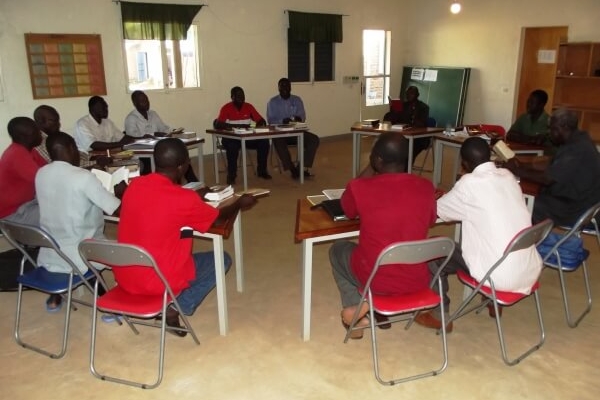
Once you have the people, the next steps are evangelism and discipleship. Yet even discipleship looks different than many Western believers expect. “Americans think of discipleship as an individual endeavor,” Ted says, “but when you’re doing it as a community, a lot of growth happens there.” He finds that even when there isn’t a pastor, believers in community go to scripture as the authority and cover one another’s weaknesses as they chase after Jesus together.
Ted believes that this method was modeled by the Apostle Paul in the book of Acts. “Paul went to places, stayed for a time, then moved on to the next place while continuing to come back and check on them. Our role is to be the catalyst, then develop disciples who can lead the church themselves.”
When asked what the biggest obstacle was, he said, “There are tons of opportunities, but we need more workers.” The need isn’t just overseas—it includes mobilizers, office staff, and prayer partners. As Ted describes it, “It’s the body of Christ in action.”
Ted reminds us that church planting is ultimately God’s work. “We need to keep pounding on Jesus’ door, begging Him to accomplish it,” he says. Our role is to show up, stay faithful, and trust Him to build His church—which He often does in ways far quieter, slower, and more beautiful than expected.
More Stories